OZG 2.0 in Practice: How to Take Your Team, City Council, and Citizens on the Digital Journey
The Online Access Act 2.0 has been in effect since July 2024. Hundreds of articles explain the legal requirements, technical standards, and deadlines. But the reality in German town halls is different: The biggest challenge is not the technology – but getting people on board.
Three critical target groups determine the success or failure of your OZG implementation: Your administrative staff, who must adopt new processes. Your city council, which must provide budget and political backing. Your citizens, who are supposed to use the services in the end – or not.
The uncomfortable truth: Despite billions in investments, e-service usage in Germany has stagnated at around 48 percent for ten years. Technically, much already works – but acceptance is lacking. OZG 2.0 is 30 percent a technology project and 70 percent a communication project.
In this article, we will show you specifically how to strategically and effectively address these three target groups – with practical formats, templates, and real examples.
Why OZG 2.0 Fails Without a Communication Strategy
The Online Access Act 2.0 brings ambitious goals: 16 focus services with priority, comprehensive digitization (once-only principle), the DeutschlandID as a central citizen account. The federal government successfully digitized all 115 prioritized federal services in January 2025. A real milestone – at the federal level.
But in municipalities, the real work begins now. And here, experiences from the first OZG round show what can go wrong:
- Employees are involved too late and experience digitization as a threat rather than a tool
- City councils do not understand the business case and refuse budget at the first delay
- Citizens do not know about new services or do not dare to use them
- Media disruptions persist: Digital frontend meets paper backend
- No crisis communication: First failure or data breach destroys painstakingly built trust
The result: Technically successful projects that no one uses. Services that were developed but miss the reality of the users. Frustrated teams, skeptical politics, insecure citizens.
"Our biggest mistake was that we programmed first and then communicated. On the second attempt, we considered communication from day one – and acceptance doubled."
Digitalization officer of a Middle Franconian municipality (anonymized)
The solution: Parallel communication to all three target groups from the start of the project. Not as an add-on, but as an integral part of your OZG implementation.
Communication Strand 1: Your Team – Change Management for the Administration

Your administrative staff are the key to success. They know the processes, work with the systems daily, and have direct contact with citizens. Without their buy-in, every digitization project fails – no matter how good the technology is.
Why Employees Fear Digitization
The fears are real and understandable:
- Job loss: "Will digital systems replace my tasks?"
- Overwhelm: "I'm not an IT expert – can I even do this?"
- Loss of control: "Do my 20 years of experience suddenly count for nothing?"
- Increased workload: "Now I have to do the old and the new?"
Talking away these concerns is the wrong approach. Instead: Take them seriously, address them, communicate transparently.
Communication Formats That Work
1. Early Involvement in Requirement Gathering
What: Workshops with clerks BEFORE requirements go to IT service providers
Why: Shows appreciation for their expertise, prevents unrealistic solutions
How often: At least 3 workshops (as-is analysis, target concept, system design review)
Composition: Department heads + experienced clerks + IT + external service providers
Practical tip: Visibly document which employee inputs have flowed into the system ("Your idea was implemented"). This creates ownership.
2. Regular Town Halls with Open Q&A
What: Monthly info events on project status for all employees
Why: Dry up the rumor mill, create transparency
Format: 30 min project update + 30 min questions (including critical ones!)
Frequency: Monthly during development, weekly 4 weeks before/after go-live
Critical: Honesty is mandatory. If there are problems, name them – with a solution plan. Sugarcoating backfires.
3. Establish a Champions Network
What: 1-2 "Digital Champions" per department as multipliers
Profile: Tech-savvy, respected in the team, strong communicator
Role: First point of contact for questions, mediates between colleagues and IT, provides feedback
Incentive: Release (e.g., 20% working time), training, visibility
Why it works: Peer-to-peer communication is more credible than top-down. "Colleague Müller managed it too" works better than "IT manager says it's easy".
4. Frame Training as "Empowerment"
Not: "Mandatory training new software"
Instead: "Qualification: Become a digital process expert"
Training concept:
- Basic training (2 days): Basic functions, typical workflows
- Role-based deep dives (1 day): Specific use cases per department
- Office hours (weekly, 6 months): Open Q&A with IT
- Video tutorials (on demand): Short how-tos for common questions
Timing: Not 6 months before go-live (forgotten), but 2-4 weeks before (still fresh).
Communicate Quick Wins
People need success experiences. Show early and visibly what has improved:
- Quantify time savings: "Residence registration process: previously 45 min, now 15 min"
- Eliminate media disruptions: "No more double entry in system A and B"
- Reduce error rate: "Automatic plausibility check prevents 80% of previous inquiries"
Format: Monthly "Digital Update" newsletter (internal) with concrete numbers and quotes from colleagues.
Checklist: Internal Communication OZG 2.0
- Kick-off workshop with all affected departments (Month 1)
- Champions network identified and trained (Month 2)
- Monthly town halls established (from Month 3)
- Requirement workshops with departments (Month 3-5)
- Internal newsletter started (from Month 4, monthly)
- Training concept developed (Month 8-10)
- Basic training conducted (4 weeks before go-live)
- Office hours offer established (from go-live, 6 months)
- Quick wins documented and communicated (Month 3 after go-live)
- Feedback round with all involved (Month 6 after go-live)
Communication Strand 2:
Your City Council – Securing Political Backing
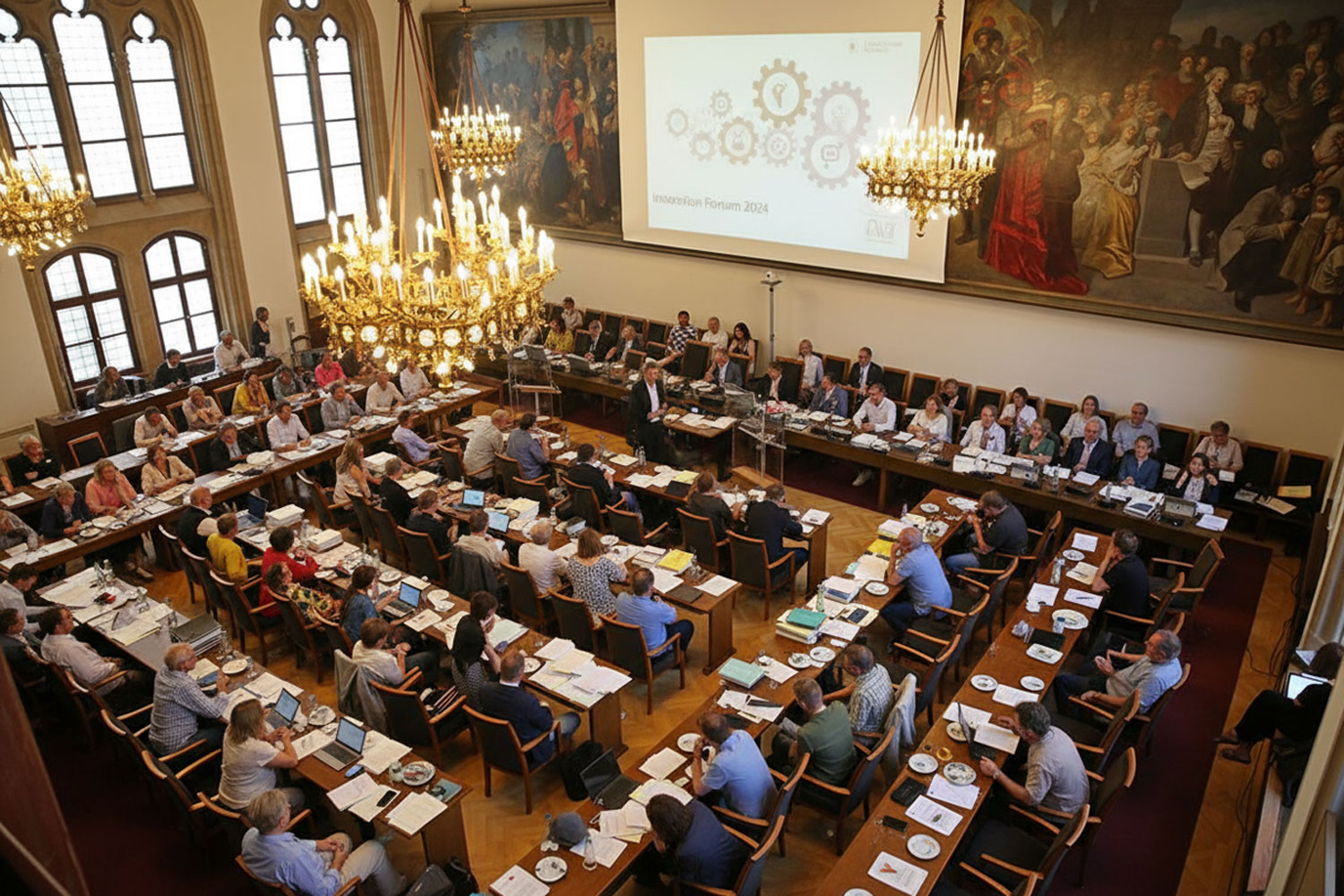
Without a city council, there is no budget. Without a budget, there is no project. It's that simple. But city council members are rarely IT experts – and they don't have to be. Their task: to strategically advance their municipality and represent citizens' interests.
Your task as an administration: Translate OZG 2.0 so that the political value becomes clear.
Why City Councils Are Skeptical (and That's Good)
Skeptical questions are legitimate and show that city councils take their oversight function seriously:
- "How much does it really cost – even in 5 years?"
- "What happens if it goes wrong? Who is liable?"
- "Why should we do this if other municipalities are waiting?"
- "Do our older citizens understand this at all?"
- "How long does such an IT project realistically take?"
These questions should not be seen as an attack, but as an opportunity: They show where your argumentation is not yet convincing.
ROI Argumentation for Non-Technicians
Technical language does not convince a city council. Benefit language does.
Instead of: "We need modern IT infrastructure"
Better: "Our citizens will save three trips to the authorities in the future – residence registration, driver's license application, and business registration work online 24/7. This means: Less waiting time, more satisfaction, more attractive business location."
Instead of: "OZG 2.0 is a legal obligation"
Better: "We will be perceived as a modern, future-proof municipality. Young families and companies look closely at how digital a city is – that's a location factor. Those who do not digitize today will lose tomorrow in the competition for residents and business tax."
Instead of: "This is a long-term project"
Better: "We have a clear milestone plan: In 12 months, the first three services will go live. In 24 months, all focus services will be online. You can see visible progress in every city council meeting – and we communicate every success publicly."
The Business Case for City Councils
A convincing city council template needs three components:
1. Executive Summary (1 page)
- Situation: Legal obligation OZG 2.0 since July 2024
- Goal: Digitize 16 focus services by 2026
- Benefits: Higher citizen satisfaction, efficiency gains in administration, location factor
- Costs: One-time €X for implementation, annually €Y for operation
- Risks & Mitigation: Technical risks minimized by experienced service providers
- Timeline: 24 months with clear milestones
2. Benefit Table (concrete)
| Stakeholder | Benefit | Measurable by |
|---|---|---|
| Citizens | 24/7 availability, no waiting times | Usage numbers, satisfaction survey |
| Administration | 30% time savings through automation | Processing time per transaction |
| Economy | Faster business registration, less bureaucracy | Processing time for business registration |
| City Council | Modern, future-proof municipality | Ranking in smart city indices |
3. Transparent Cost Breakdown
No hidden costs. Better to calculate realistically than to have to adjust later.
- Implementation (one-time): Software, interfaces, training, consulting
- Operation (annually): Licenses, hosting, support, maintenance
- Personnel (ongoing): 0.5 FTE digitalization coordination, training capacity
- Risk buffer: 15% for unforeseen events
Research funding sources: State funding, EU funds, inter-municipal cooperation (cost sharing).
Stage Intermediate Successes
24 months is an eternity politically. Create communicable successes every 6 months:
- Month 6: "Requirements defined, service provider selected"
- Month 12: "First service (e.g., residence registration) in test operation"
- Month 18: "Three services live, already 500 online registrations"
- Month 24: "All 16 focus services successfully digitized"
Format: Short presentation in the city council (5 min) + press release + social media.
Make Federal Coordination Transparent
One of the biggest challenges with OZG 2.0: You are dependent on federal and state levels. Standards, interfaces, platforms are decided elsewhere.
Transparency creates understanding:
- "We can only launch service X when state Y provides the interface – currently announced for Q3 2025"
- "The delay with DeutschlandID lies with the federal government, not with us. We are preparing in parallel and are ready as soon as available."
Important: Do not let it appear as an excuse. Show what you are advancing despite dependencies.
Checklist: City Council Communication OZG 2.0
- Business case developed with clear ROI (Month 3)
- City council template with executive summary created (Month 4)
- Informal pre-briefing with faction leaders (before official submission)
- City council resolution obtained (Month 5)
- Semi-annual progress updates to city council established
- In case of problems: Proactive info to city council BEFORE press
- Present milestone successes in city council
- Final success presentation (Month 24) with outlook phase 2
Communication Strand 3:
Your Citizens – From Awareness to Adoption

The best digital offering is useless if no one knows about it – or dares to use it. The eGovernment Monitor 2024 shows: Only 30 percent of Germans know the federal portal, only 6 percent used it in 2023.
The challenge: You are competing with 20 years of analog habit ("I just go to the office") and digital mistrust ("What happens to my data?").
Why Citizens Do Not Use Digital Services
- Habit: "I know going to the office, doing it online is new"
- Ignorance: "It's available online? I didn't know."
- Mistrust: "Are my data safe there?"
- Overwhelm: "I'm not tech-savvy enough"
- Bad experiences: "Last time it didn't work"
Each of these barriers needs a specific communicative response.
Launch Communication: The First 100 Days Decide
When your digital service goes live, you have a narrow window to generate attention and build trust.
Multi-Channel Is a Must, Not a Choice
Not all citizens use the same information channels. You need a mix:
| Channel | Target Group | Frequency | Content Format |
|---|---|---|---|
| Website | All who actively search | Permanent | Detailed how-tos, FAQ, video tutorials |
| Official Gazette | Older generation, traditional | 3x (announcement, launch, follow-up) | Step-by-step guide with screenshots |
| Social Media | Younger, digitally savvy | Weekly, 8 weeks | Short videos, user testimonials |
| Local Press | Broad public | 2x (launch, success story month 3) | Press release, mayor interview |
| Direct Mail | Affected (e.g., businesses) | Once before launch | Personal invitation with QR code |
Communicate Benefits, Not Features
Classic mistake: "Residence registration is now available digitally."
Better: "Never sit in the waiting area again: Register your residence in 10 minutes from home – even on Sundays at 10 PM."
Even better (with emotion): "Just moved? While the moving boxes are still in the hallway, complete the registration comfortably from the sofa. No appointment, no waiting, no stress."
Build Trust: Proactively Address Data Protection
58 percent of Germans have security concerns about online government transactions. Do not ignore this – address it offensively:
- Visible on every service page: "Your data is processed according to the highest German security standards. Servers are located in Germany. Encrypted transmission."
- Explanatory video (60 sec): "How secure is your data with us"
- Use seals: GDPR-compliant, BSI-certified (if applicable)
- Show transparency: "You can view at any time who has accessed your data"
Onboarding: The First Use Must Be a Success Experience
You have exactly one attempt. If the first use is frustrating, no one will return.
Tutorial Videos (max 2 minutes)
- Screen recording with voice-over
- Show real use cases, not abstract functions
- Subtitles for barrier-free access
- Embed directly on the service start page
Service Hotline (Not Just Tech Support)
Many questions are not technical but content-related: "What documents do I need?" "Does this apply to me?"
- Telephone hotline with competent staff (no call center standard answers)
- Availability also outside classic office hours (e.g., until 6 PM, Saturday mornings)
- Chat option for digitally savvy users
- First 3 months: Plan generous capacities
FAQ Based on Real Questions
Not: "What is the Online Access Act?" (citizens are not interested)
Instead: "What happens if I am interrupted while filling out? Can I continue later?" (real user question)
Living document: Update FAQ every 2 weeks based on hotline inquiries.
Feedback Loops: Learn from Users
The best communication strategy is worthless if you do not listen.
- Feedback button on every page: "Was this service helpful?" (Yes/No + optional comment field)
- User survey after 3 months: Representative sample, also survey non-users ("Why didn't you try it?")
- Implement visibly: "Based on your feedback, we improved function X" → shows that you take it seriously
Case Study: How Wittenberge Succeeded Through Participation
The city of Wittenberge (Brandenburg, 16,000 inhabitants) conducted focus groups with citizens before launching digital services. Result:
- Insight that desired functions should be prioritized differently
- Adjustment of the user interface based on feedback from over 60-year-olds
- Early identification of comprehension problems with technical terms
Result: Usage rate twice as high as in comparison municipalities without participation.
Checklist: Citizen Communication OZG 2.0
- Multi-channel communication plan developed (6 weeks before launch)
- Tutorial videos produced (4 weeks before launch)
- FAQ created based on pilot tests (4 weeks before launch)
- Service hotline trained and ready (2 weeks before launch)
- Press release sent (1 week before launch)
- Social media campaign started (launch week, run for 8 weeks)
- Official gazette article with instructions (launch issue)
- Direct mail to target groups (e.g., businesses for business registration)
- Feedback mechanism active (from launch)
- User survey (Month 3 after launch)
- Communicate success story (Month 3: "X citizens have already...")
The 5 Most Common Communication Mistakes in OZG Implementation
1. Starting Too Late
The mistake: "First we finish developing, then we communicate."
The consequence: Team feels bypassed, city council has no time to think, citizens are caught off guard.
The solution: Consider communication from day 1. Budget for it (rule of thumb: 15-20% of the total budget).
2. Using Only One Channel
The mistake: "We put it on the website, that's enough."
The consequence: Only reach those who are already digitally savvy and actively searching.
The solution: Multi-channel approach. Different generations use different media.
3. Technical Language Instead of Benefit Language
The mistake: "Implementation of an API interface for the integration of EfA services."
The consequence: No one outside IT understands what it's about.
The solution: Always translate: What does this mean specifically for citizens? For employees? For the municipality?
4. Not Planning Resources for Communication
The mistake: "We do communication on the side."
The consequence: Lovelessly made press releases, half-hearted social media posts, overwhelmed hotline.
The solution: Plan for professional communication support – internally or externally. This is investment protection.
5. Stopping Communication After Launch
The mistake: "Service is live, now it runs by itself."
The consequence: Usage numbers stagnate after initial curiosity, feedback is not collected, improvement potential remains unused.
The solution: Continuous communication for at least 6 months after launch. Tell success stories, communicate improvements, collect feedback.
Practical Tool: The OZG 2.0 Communication Roadmap
An 18-month project needs a structured communication plan. Here is a template that you can adapt to your project:
| Phase | Period | Internal (Team) | Politics (City Council) | External (Citizens) |
|---|---|---|---|---|
| Concept | Month 1-3 | • Kick-off | ||
| • Requirement workshops | ||||
| • Recruit champions | • Informal pre-briefings | |||
| • Present business case | • No external communication yet | |||
| Development | Month 4-12 | • Monthly town halls | ||
| • Newsletter | ||||
| • Design reviews with departments | • City council resolution (M5) | |||
| • Semi-annual update (M10) | • Teaser (M10): "Coming soon" | |||
| • Focus groups (M11) | ||||
| Pre-Launch | Month 13-14 | • Intensive training | ||
| • Start office hours | • Launch announcement | • Multi-channel campaign | ||
| • Publish tutorial videos | ||||
| • Press release | ||||
| Launch | Month 15 | • Internal go-live event | ||
| • Weekly updates | • Official launch ceremony | • Intensive social media | ||
| • Staffed hotline | ||||
| • Local press coverage | ||||
| Post-Launch | Month 16-21 | • Collect feedback | ||
| • Communicate quick wins | • Success update (M18) | • User survey (M18) | ||
| • Success stories (M18) | ||||
| • Continuous FAQ updates |
Clearly define responsibilities:
- Project Management: Overall coordination, decisions
- Communication (internal/external): Content creation, channel management
- IT: Technical content, training materials
- Departments: Process expertise, user stories
- Mayor/District Administrator: Political representation, city council communication
Conclusion: OZG 2.0 is a Communication Project
The Online Access Act 2.0 presents enormous challenges for German municipalities. But the biggest hurdle is not the technology – modern platforms, standards, and service providers exist. The biggest hurdle is the people.
Administrative staff must accept and live new processes. City councils must release budgets and provide political backing. Citizens must know, understand, and use new services.
None of these groups will do this automatically just because the technology is ready. They all need the same thing: Clear, honest, continuous communication.
The successful OZG projects in the coming years will not be those with the best technology – but those with the best communication. Those who have understood that digitization is 30 percent an IT project and 70 percent a change project.
The good news: Communication is plannable, learnable, implementable. With the right formats, the right tone, and sufficient resources, you can successfully engage all three target groups.
Invest in communication. It is not a luxury, but investment protection. Because the best digital offering is worthless if no one understands it, no one supports it, and no one uses it.